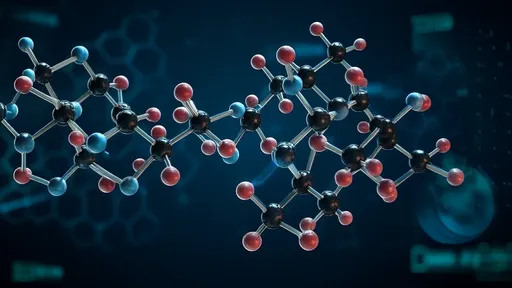
In a groundbreaking leap for molecular imaging, scientists have captured the precise moment of chemical bond breaking with unprecedented atomic-scale resolution using attosecond X-ray diffraction. This revolutionary technique effectively produces a molecular movie, frame by frame, revealing the intricate dance of atoms during one of chemistry's most fundamental processes. For decades, chemists have theorized and inferred the mechanisms of bond rupture, but direct observation at such a fleeting timescale remained a formidable challenge. The ability to now watch these events unfold in real-time, or more accurately, in attosecond time, opens a new chapter in our understanding of chemical reactions, material science, and even biological processes at the quantum level.
The core technology enabling this discovery is the generation and application of attosecond X-ray pulses. An attosecond is an almost incomprehensibly short unit of time—one quintillionth of a second (10^-18 seconds). To put this into perspective, an attosecond is to a second what a second is to the age of the universe. Chemical bonds break on this timescale, making traditional observation methods, which operate on much slower femtosecond or picosecond pulses, effectively blind to the initial electronic motions that dictate the reaction pathway. The development of bright, coherent X-ray sources, such as those based on high-harmonic generation or advanced free-electron lasers, has finally provided the necessary tool to illuminate these ultrafast events.
The experiment itself is a marvel of precision and timing. Researchers typically initiate the bond-breaking process with an initial ultrafast laser pulse, often in the femtosecond range, which pumps energy into a specific molecular bond in a target sample, such as a diatomic molecule or a more complex structure. Almost simultaneously, a precisely delayed attosecond X-ray pulse is fired at the excited molecule. This X-ray pulse acts as an incredibly fast flashbulb, diffracting off the electron clouds of the constituent atoms. By analyzing the diffraction pattern captured by a sensitive detector, scientists can reconstruct the precise positions of the atoms at that exact attosecond moment. By repeating this process millions of times with meticulously controlled delays, they can stitch together a sequence of atomic snapshots, creating a stop-motion movie of the bond as it stretches and ultimately severs.
What these atomic movies reveal is far more complex and nuanced than simple cartoon representations of bonds as static lines between atoms. The process is not instantaneous but involves a rapid evolution of the electron cloud that holds the atoms together. The data shows a swift redistribution of electron density, a weakening of the binding orbital, and a correlated motion of the atomic nuclei as they repel each other and begin their separation. This isn't just two atoms moving apart; it's the quantum mechanical glue between them dissolving in a precise sequence of steps. Observing this allows scientists to distinguish between different theoretical models of bond cleavage, such as homolytic or heterolytic fission, and validate quantum dynamics calculations with direct experimental evidence.
The implications of this capability are profound and span across multiple scientific disciplines. In fundamental chemistry, it allows for the direct observation of reaction transition states—the elusive, high-energy configurations that reactants pass through to become products. These states have long been inferred from kinetic data but never directly "seen." This technology makes that possible. In materials science, understanding bond breaking at this level is crucial for designing new materials with tailored properties, especially those that must withstand extreme stress, radiation, or chemical environments. For instance, designing the next generation of catalysts, which rely on the making and breaking of bonds on their surfaces, could be revolutionized by this direct insight.
Furthermore, the potential applications extend into biology and medicine. Many biological processes, such as vision (the isomerization of retinal), DNA damage from radiation, or the action of pharmaceutical drugs, involve ultrafast electronic rearrangements and bond alterations. Capturing these events with attosecond precision could provide unparalleled insight into the molecular mechanisms of life and disease, potentially leading to more effective and targeted therapies. It could allow researchers to watch, in real-time, how a drug molecule binds to a protein receptor or how a strand of DNA repairs itself after damage.
Despite the spectacular progress, the field of attosecond science is still in its relative infancy, facing significant technical challenges. Generating stable, high-flux attosecond X-ray pulses requires immense laser power and sophisticated beamline infrastructure, currently available only at a handful of major facilities worldwide. The data analysis is exceptionally complex, requiring advanced algorithms and supercomputers to convert subtle diffraction patterns into atomic coordinates. Moreover, studying more complex molecules than simple diatomics increases the computational and experimental difficulty exponentially. Researchers are actively working to extend the technique to larger molecular systems and to capture even more complex reactions involving multiple bonds.
Looking ahead, the future of attosecond chemistry is incredibly bright. As laser and X-ray source technology continues to advance, these techniques will become more accessible and powerful. The ultimate goal is to move beyond simple bond breaking and capture the full panorama of a chemical reaction from start to finish, watching reactants transform into products through the transition state with complete atomic and temporal clarity. This would represent the culmination of a long-standing dream in chemistry. The publication of this "atomic-level movie" of bond breaking is not just a single achievement; it is a definitive proof-of-concept that opens the door to a new era of discovery, where we no longer have to imagine the quantum world—we can finally watch it happen.
By /Aug 25, 2025
By /Aug 25, 2025
By /Aug 25, 2025
By /Aug 25, 2025
By /Aug 25, 2025

By /Aug 25, 2025

By /Aug 25, 2025
By /Aug 25, 2025
By /Aug 25, 2025
By /Aug 25, 2025
By /Aug 25, 2025
By /Aug 25, 2025
By /Aug 25, 2025
By /Aug 25, 2025
By /Aug 25, 2025
By /Aug 25, 2025
By /Aug 25, 2025
By /Aug 25, 2025
By /Aug 25, 2025

By /Aug 25, 2025
