Accelerator-Driven Transmutation: Neutron Economy Optimization for Nuclear Waste Element Conversion

Aug 25, 2025 By

The global nuclear energy sector faces a persistent challenge in the form of long-lived radioactive waste, a byproduct of fission reactions that has historically complicated the narrative of atomic power as a clean energy solution. While geological repositories remain the primary proposed solution for isolation, scientific communities have increasingly turned their attention to a more transformative approach: accelerator-driven transmutation. This technology, which leverages particle accelerators to alter the very composition of nuclear waste, represents not merely a disposal strategy but a fundamental reimagining of the waste lifecycle. Its potential hinges critically on the efficient management of neutron interactions, making the optimization of neutron economy the central pillar upon which its feasibility rests.

At its core, accelerator-driven transmutation employs a high-power proton accelerator directed at a heavy metal target, such as lead or tungsten. The impact of the proton beam generates a cascade of neutrons through a process known as spallation. These neutrons are then channeled into a subcritical assembly—a core of nuclear waste materials that cannot sustain a chain reaction on its own. Unlike a conventional reactor, this system operates without criticality, inherently eliminating the risk of a meltdown. The introduced neutrons are captured by the nuclei of long-lived actinides and fission products, transmuting them into shorter-lived or stable isotopes through neutron-induced reactions like fission or neutron capture.

The entire endeavor's success is dictated by a concept known as neutron economy—a meticulous accounting of the birth, life, and death of every neutron within the system. It is a balance sheet of sorts, where the goal is to maximize the number of neutrons available for waste-destruction reactions while minimizing unproductive losses. The spallation process must generate a sufficiently intense neutron flux. Each neutron must then be effectively moderated to the optimal energy level for inducing transmutation in specific target isotopes. Any neutron that escapes the system, is parasitically absorbed by structural materials, or is captured by elements that do not contribute to the transmutation process represents a direct inefficiency that diminishes the overall system's throughput and economic viability.

Optimizing this economy is a multi-faceted engineering puzzle. It begins with the accelerator itself, where research focuses on increasing beam power and efficiency to produce more neutrons per unit of input energy. The design of the spallation target is equally crucial; it must withstand extreme radiation and thermal loads while effectively multiplying the incoming protons into a shower of neutrons. Subsequently, the architecture of the subcritical core—its geometry, fuel composition, and moderator-to-fuel ratio—must be meticulously designed to create an environment where neutrons are most likely to interact with the waste isotopes rather than be lost. Advanced moderators and reflectors are employed to shepherd neutrons, keeping them within the active region and at the right energy spectrum to favor the desired nuclear reactions.

The choice of which waste elements to target is itself a strategic decision informed by neutronics. Long-lived actinides like americium, curium, and neptunium are prime candidates because their fission, induced by neutron capture, not only destroys them but also releases additional neutrons, creating a valuable multiplicative effect that improves the overall neutron balance. Conversely, dealing with certain fission products, which typically absorb neutrons without producing more, presents a greater challenge to neutron economy and requires exceptionally efficient systems to be viable.

Current research and development are pushing the boundaries of what is possible. Projects like the MYRRHA prototype in Belgium are instrumental in moving from theoretical models to practical demonstration. Scientists are employing sophisticated computer simulations to model neutron transport with incredible precision, iterating through countless core configurations virtually to identify optimal designs before any metal is cut. These models are validated against experiments conducted with existing neutron sources and small-scale prototypes, creating a feedback loop that continuously refines our understanding of the complex neutron interactions at play.

The implications of perfecting this technology are profound. From an environmental perspective, it promises to drastically reduce the radiotoxic lifetime of nuclear waste from hundreds of thousands of years to a few centuries, fundamentally altering the stewardship burden for future generations. Economically, it could change the calculus of nuclear power by mitigating its most significant external cost, potentially leading to greater public acceptance and a more prominent role in a low-carbon energy mix. Furthermore, by consuming existing stockpiles of plutonium and other actinides, it enhances global proliferation resistance by reducing the amount of weapons-usable material in circulation.

In conclusion, the path forward for accelerator-driven transmutation is inextricably linked to the relentless pursuit of neutron economy. It is a demanding scientific and engineering journey, requiring innovations in accelerator technology, materials science, and nuclear physics. While significant hurdles remain, the potential reward—a sustainable and virtually complete solution to the nuclear waste dilemma—offers a compelling vision for the future of nuclear energy. The optimization of every neutron is not merely a technical detail; it is the key that could unlock the door to closing the nuclear fuel cycle and realizing the full, clean potential of atomic power.

Recommend Posts
Science

Quantum Coherence in the Cryptochrome-Based Magnetoreception Mechanism of Migratory Birds

By /Aug 25, 2025

For decades, the mysterious ability of migratory birds to navigate across continents with astonishing precision has captivated scientists and laypeople alike. How do creatures like the European robin or the Arctic tern traverse thousands of miles, often through featureless skies or over open ocean, and still find their way? The answer, it turns out, may lie not in conventional biology, but in the strange and counterintuitive world of quantum mechanics. At the heart of this fascinating puzzle is a protein found in the avian eye: cryptochrome.
Science

Neuromorphic Visual Chips: Retina-Inspired Spiking Neural Networks

By /Aug 25, 2025

In the rapidly evolving landscape of artificial intelligence and neuromorphic engineering, a groundbreaking innovation is capturing the attention of researchers and industry leaders alike: the development of neuro-morphic vision chips inspired by the human retina. These chips, which leverage pulse neural networks to mimic the biological processes of vision, represent a significant leap forward in creating efficient, low-power, and high-speed visual processing systems. Unlike traditional image sensors that capture frames sequentially and process them through complex algorithms, these retina-inspired chips event-driven approach allows for dynamic, real-time response to visual stimuli, much like the human eye. This technology is not merely an incremental improvement but a paradigm shift, promising to revolutionize fields ranging from autonomous vehicles and robotics to medical imaging and surveillance.
Science

Chiral Organic Molecules in Meteorites: Verification of Extraterrestrial Bias in the Origin of Life

By /Aug 25, 2025

The discovery of amino acids on meteorites has long tantalized scientists with the possibility that the building blocks of life may have been delivered to Earth from space. But one of the most profound implications of this extraterrestrial connection lies in a subtle molecular asymmetry—a phenomenon known as chirality. Organic molecules can exist in two mirror-image forms, much like left and right hands. Yet life on Earth exclusively uses left-handed amino acids and right-handed sugars. This preference, called homochirality, is a fundamental and unresolved mystery in the origin of life. Recent analyses of carbonaceous chondrites—primitive meteorites that have fallen to Earth—are providing compelling evidence that this bias might not have originated on our planet at all, but was instead imprinted by processes in the interstellar medium or the early solar system.
Science

Acoustic Archaeology Project: 3D Digital Reconstruction of Ancient Musical Instrument Acoustic Fields

By /Aug 25, 2025

In the hushed halls of museums and the silent depths of archaeological sites, the physical remnants of ancient civilizations have long told a story of visual and tactile artistry. We can see the intricate carvings, feel the weight of a stone tool, and marvel at the craftsmanship of a gold funerary mask. Yet, for all these sensory experiences, one profound dimension of ancient life has remained stubbornly silent: its sound. The music, the chants, the very acoustic atmosphere of sacred and social spaces were thought to be lost to time, ephemeral vibrations that faded into nothingness centuries ago. This historical silence, however, is being shattered by a revolutionary new field known as acoustic archaeology.
Science

Mathematical Epidemic Forecasting: Modeling the Spread Dynamics on Social Network Topologies

By /Aug 25, 2025

In the ever-evolving landscape of infectious disease modeling, a paradigm shift is underway as researchers increasingly turn their attention to the intricate dynamics of social networks. The traditional compartmental models, while valuable, often fall short in capturing the nuanced ways diseases spread through human populations. It is within this context that mathematical epidemiology has begun to embrace the complex topology of social networks, forging a new frontier in our understanding of transmission dynamics.
Science

Surgical Practices in the Stone Age: A Study on the Healing Patterns of Cranial Trepanation

By /Aug 25, 2025

In the shadowy recesses of human prehistory, long before the advent of modern medicine, our ancestors performed a remarkable and daunting medical procedure: drilling or scraping a hole into the human skull. This practice, known as trepanation, represents one of the earliest forms of surgical intervention, with archaeological evidence tracing its roots back to the Neolithic period. The discovery of ancient skulls bearing precisely crafted holes, many showing clear signs of healing, has captivated anthropologists and medical historians for decades. It forces a profound reconsideration of the capabilities and sophistication of early human societies, suggesting a complex understanding of human anatomy, a willingness to intervene in cases of trauma or illness, and perhaps even a belief in spiritual or ritualistic healing.
Science

Neanderthal Dental Medicine: Chemical Evidence of Primitive Dental Treatment

By /Aug 25, 2025

In the collective imagination, Neanderthals have long been portrayed as primitive brutes, a simplistic caricature that modern science continues to systematically dismantle. The latest evidence challenging this outdated view comes not from a grand cave painting or a sophisticated tool, but from something remarkably intimate: a 50,000-year-old tooth. Analysis of dental calculus—the hardened plaque—from a Neanderthal individual found in the Cova de les Teixoneres site in Spain has revealed a startling chapter in prehistory: the practice of intentional, plant-based medicinal dentistry. This discovery provides the earliest known chemical evidence of a form of oral healthcare, suggesting a level of empathy, knowledge, and cultural sophistication previously denied to our ancient cousins.
Science

The Enigma of Dinosaur Metabolic Rates: Evolutionary Analysis of Microvascular Networks in Bone Tissue

By /Aug 25, 2025

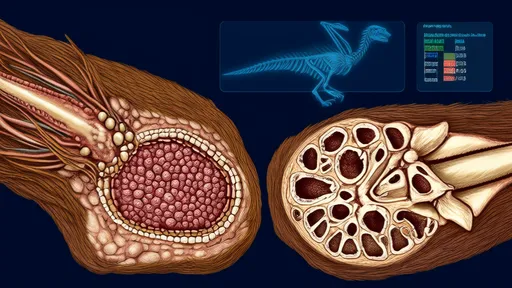
For over a century, paleontologists have grappled with one of the most enduring mysteries in evolutionary biology: were dinosaurs warm-blooded like modern birds and mammals, or cold-blooded like their reptilian ancestors? The debate has raged in academic circles, fueled by fragmentary evidence and competing interpretations. Now, a groundbreaking study published in Science Advances has turned to an unexpected source for answers: the intricate microvascular networks preserved within dinosaur bone tissue. This research doesn't just aim to settle the metabolic debate; it seeks to map the very evolutionary pathway that may have led from sluggish reptiles to the energetic creatures that dominated the Mesozoic era.
Science

Reconstructing Pre-Industrial Atmospheric Pollution Benchmarks: A History of Ice Core Nanoplastics

By /Aug 25, 2025

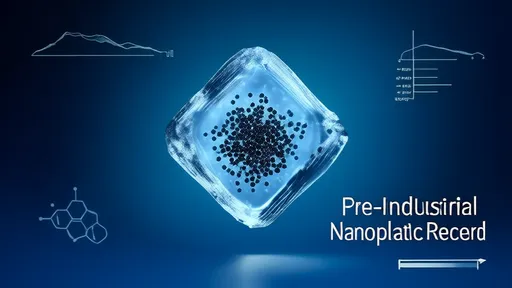
Scientists have recently turned to an unconventional source to understand the historical footprint of plastic pollution: ice cores drilled from remote glaciers. These frozen time capsules are revealing startling new evidence about the presence of nanoplastics in our atmosphere long before the modern plastic era, fundamentally reshaping our understanding of pre-industrial atmospheric baselines.
Science

Resurrection of the Amber Ancient Microbiome: Experiments with Early Eocene Insect Gut Flora

By /Aug 25, 2025

In a groundbreaking scientific endeavor that reads like the plot of a science fiction novel, researchers have successfully revived ancient microbial communities from the guts of insects preserved in amber for millions of years. The study, focusing on the Eocene epoch, has opened a unprecedented window into a lost microbial world, challenging our understanding of evolution, microbiology, and the very limits of life itself.
Science

DNA Molecular Repository: A Cryptographic Archiving System for Global Biological Data

By /Aug 25, 2025

In an era where digital data generation is exploding at an unprecedented rate, scientists and technologists are looking toward an ancient and fundamental molecule—DNA—for solutions. DNA, the very blueprint of life, is emerging as a revolutionary medium for long-term, high-density data storage. The concept of DNA-based data archiving is no longer confined to theoretical discussions or science fiction; it is rapidly evolving into a tangible, global initiative aimed at preserving humanity’s most valuable information for centuries, if not millennia, to come.
Science

Quantum Dot Neuroimaging: Live 3D Imaging of Dopamine Release

By /Aug 25, 2025

In a landmark advancement for neuroscience, researchers have successfully captured the first three-dimensional in vivo images of dopamine release in the brain using quantum dot-based technology. This breakthrough, emerging from a multi-institutional collaboration, provides an unprecedented view into the real-time dynamics of one of the brain's most crucial neurotransmitters. For decades, scientists have been piecing together the role of dopamine from indirect measurements, but observing its actual ebb and flow in a living organism has remained an elusive goal. The new methodology, detailed in a recent issue of a leading scientific journal, finally lifts the veil, offering a vibrant, dynamic map of neurochemical communication.
Science

Viral Capsid Dynamics: Conformational Pathways Revealed by Cryo-Electron Microscopy

By /Aug 25, 2025

The intricate dance of viral capsid assembly and disassembly represents one of nature's most sophisticated molecular processes, a choreography that has long fascinated structural biologists. For decades, researchers have sought to visualize these dynamic conformational changes in high resolution, but the transient nature of these states and the limitations of traditional structural techniques presented significant challenges. The advent of cryo-electron microscopy (cryo-EM) has fundamentally transformed this landscape, offering an unprecedented window into the kinetic pathways that govern viral life cycles.
Science

Cellular Mechanics Atlas: Deciphering the Stress Conduction Network in Tumor Metastasis

By /Aug 25, 2025

In the intricate landscape of cancer research, the mechanical properties of cells have emerged as a pivotal frontier in understanding tumor progression and metastasis. Recent breakthroughs in mapping cellular mechanics have unveiled a complex stress transmission network that tumors exploit to facilitate their spread. This mechanical interplay, once overshadowed by biochemical signaling, is now recognized as a critical driver of metastatic efficiency, offering new perspectives on how physical forces shape pathological behavior.
Science

Attosecond X-ray Diffraction: Atomic-Level Movies of Chemical Bond Breaking Processes

By /Aug 25, 2025

In a groundbreaking leap for molecular imaging, scientists have captured the precise moment of chemical bond breaking with unprecedented atomic-scale resolution using attosecond X-ray diffraction. This revolutionary technique effectively produces a molecular movie, frame by frame, revealing the intricate dance of atoms during one of chemistry's most fundamental processes. For decades, chemists have theorized and inferred the mechanisms of bond rupture, but direct observation at such a fleeting timescale remained a formidable challenge. The ability to now watch these events unfold in real-time, or more accurately, in attosecond time, opens a new chapter in our understanding of chemical reactions, material science, and even biological processes at the quantum level.
Science

Stratospheric Wind Power: Helium Balloon-Tethered 20-Kilometer High Wind Turbine Arrays

By /Aug 25, 2025

In the quest for sustainable energy solutions, a radical concept is gaining altitude—literally. High-altitude wind power generation using helium-balloon tethered turbines at 20 kilometers above sea level represents one of the most audacious and promising frontiers in renewable energy technology. Unlike traditional wind farms constrained by terrain, weather patterns, and human activity, this approach harnesses the relentless and powerful winds of the stratosphere, offering the potential for unprecedented energy consistency and output.
Science

Phototrophic-Photovoltaic Hybrid Power Generation on Building Facades

By /Aug 25, 2025

In the evolving landscape of sustainable architecture, a groundbreaking innovation is capturing the attention of designers, engineers, and environmentalists alike: the Algal Bio-Photovoltaic Wall. This technology represents a sophisticated fusion of biology and photovoltaics, transforming building facades into dynamic, energy-generating systems that not only produce electricity but also contribute to carbon sequestration and improved building performance.
Science

Accelerator-Driven Transmutation: Neutron Economy Optimization for Nuclear Waste Element Conversion

By /Aug 25, 2025

The global nuclear energy sector faces a persistent challenge in the form of long-lived radioactive waste, a byproduct of fission reactions that has historically complicated the narrative of atomic power as a clean energy solution. While geological repositories remain the primary proposed solution for isolation, scientific communities have increasingly turned their attention to a more transformative approach: accelerator-driven transmutation. This technology, which leverages particle accelerators to alter the very composition of nuclear waste, represents not merely a disposal strategy but a fundamental reimagining of the waste lifecycle. Its potential hinges critically on the efficient management of neutron interactions, making the optimization of neutron economy the central pillar upon which its feasibility rests.
Science

Tidal Resonance Focusing System: Enhanced Energy Capture through Coastal Topography Optimization

By /Aug 25, 2025

The relentless pulse of the ocean has long captivated engineers and energy scientists, presenting a vast, untapped reservoir of power. Traditional wave energy converters, while promising, often grapple with inefficiency, struggling to consistently harness the sea's chaotic energy. A paradigm shift is emerging, however, not from reinventing the capture mechanism itself, but from reimagining the stage upon which it performs. The frontier of this innovation lies in the strategic optimization of coastal geography to amplify energy capture, a concept moving from theoretical models into tangible pilot projects.
Science

Geothermal-Photovoltaic Hybrid Power Stations: Surface-Subsurface Energy Coupling in Abandoned Oil Fields

By /Aug 25, 2025

The oil fields that once powered the 20th century now stand as monuments to a bygone era, their derricks silent and wells depleted. Yet, in their abandonment lies an unexpected opportunity—a chance to repurpose these industrial landscapes into hubs of renewable energy innovation. The concept of geothermal-photovoltaic (GPV) hybrid power station, is emerging as a transformative approach to energy generation, particularly in regions where oil extraction has left behind both infrastructure and subterranean heat. By coupling surface solar arrays with underground geothermal systems, these facilities are turning abandoned oil fields into dynamic energy sources, proving that the past can indeed fuel the future.