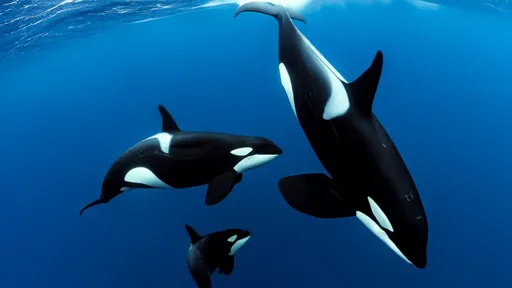
In the vast blue expanse of our oceans, a sophisticated form of communication unfolds beneath the waves, one that has captivated scientists and ocean enthusiasts alike. Dolphins, with their remarkable intelligence and social complexity, utilize a rich tapestry of sounds to interact, navigate, and thrive in their aquatic world. Their vocalizations—comprising whistles, clicks, and burst-pulse calls—form a language that, while not entirely deciphered, reveals glimpses of a deeply intricate social structure and cognitive ability. For decades, researchers have endeavored to unravel the meanings behind these sounds, piecing together how these marine mammals convey identity, emotion, and even abstract concepts.
The most studied aspect of dolphin communication is the signature whistle. Each dolphin develops a unique whistle early in life, akin to a name, which it uses to announce its presence and maintain contact with others in the group. These whistles are not genetically hardwired but are learned and can be imitated, allowing dolphins to call each other specifically—a rare phenomenon in the animal kingdom. Studies have shown that dolphins respond more strongly to recordings of their own signature whistles, indicating self-awareness and social bonding. This system facilitates cohesion in the often murky and vast ocean environments, enabling mothers to locate calves and allies to coordinate during hunts or travels.
Beyond individual identification, dolphins employ a variety of other whistles that appear to convey emotional states or intentions. High-pitched, rapid whistles often correlate with excitement or distress, such as during feeding frenzies or when encountering threats. Conversely, slower, modulated whistles might signal contentment or social affiliation. In captive settings, dolphins have been observed using specific whistle sequences when requesting toys or interacting with familiar humans, suggesting a level of intentional communication that borders on referential signaling. The flexibility and learning capacity involved in these whistles hint at a vocal culture where dialects can develop between different pods, passed down through generations.
Clicks, on the other hand, serve a dual purpose: echolocation and communication. Dolphins produce rapid series of clicks that bounce off objects, returning echoes that paint a detailed sonic image of their surroundings—detecting the size, shape, and even internal structure of prey or obstacles. However, these clicks are not solely functional; variations in click patterns and rates are believed to carry social meanings. For instance, aggressive encounters might involve louder, more repetitive clicks, while softer, intermittent clicks could be used in friendly approaches. Some researchers propose that click sequences might encode information about food sources or dangers, acting as a shared knowledge system within the pod.
The least understood category, burst-pulse calls, consists of rapid clusters of clicks that sound like squawks or bleats to human ears. These calls are often heard during high-energy social interactions, such as mating competitions, play, or disputes. Their complexity and variability make them challenging to decode, but they are thought to express intense emotions or urgency. In some contexts, burst-pulse calls might serve to synchronize group behavior, like sudden dives or attacks, functioning as a command or rallying signal. The overlap between these calls and whistles or clicks suggests a graded system where meaning can shift based on context, tone, and repetition.
What makes dolphin communication truly extraordinary is its syntactic structure. Analyses of vocal sequences reveal patterns that resemble grammar, where the order of sounds alters the message. Dolphins combine whistles, clicks, and burst-pulse calls into longer sequences, potentially creating "sentences" that convey complex information. Experiments have demonstrated that dolphins can understand artificial languages created by humans, following commands that involve both objects and actions, which implies an innate capacity for processing syntax. This linguistic sophistication rivals that of some primates and birds, positioning dolphins as one of the few animals capable of hierarchical communication.
However, interpreting this language is fraught with challenges. The ocean's acoustic environment is noisy and dynamic, with sounds traveling differently based on temperature, salinity, and depth. Dolphins likely adapt their vocalizations to these conditions, adding layers of variation that complicate human analysis. Moreover, their communication is multimodal, involving body postures, touch, and even bubble streams, which integrate with vocal sounds to form a holistic message. Without understanding these visual and tactile cues, we only grasp half the conversation. Ethical considerations also arise, as capturing or interfering with wild dolphins for study can disrupt their natural behaviors and social networks.
Recent technological advancements offer new hope for deeper insights. Hydrophone arrays and machine learning algorithms are being deployed to record and analyze vast datasets of dolphin sounds, identifying patterns that escape the human ear. Some projects aim to develop two-way communication interfaces, where dolphins could use underwater keyboards or sound triggers to make requests, potentially revealing how they conceptualize their world. Meanwhile, non-invasive studies of wild pods continue to uncover contextual meanings, such as specific calls for particular prey species or alliance formations among males.
The implications of understanding dolphin language extend beyond mere curiosity. It challenges our anthropocentric views of intelligence and language, forcing us to recognize consciousness in other species. Conservation efforts could benefit immensely; if we can interpret distress calls related to pollution, ship noise, or dwindling food supplies, we might respond more effectively to protect these vulnerable populations. Furthermore, it raises ethical questions about how we treat dolphins in captivity, suggesting that their communications reflect a depth of emotion and sociality that demands greater respect and autonomy.
In the end, the study of dolphin communication is a humbling endeavor. It reminds us that humanity is not the sole possessor of complex language or rich emotional lives. As we listen to the clicks and whistles echoing through the deep, we are hearing the voices of another intelligent species, one that has evolved its own way of perceiving and describing the world. While we may never fully grasp every nuance of their conversations, each discovery brings us closer to bridging the gap between our species, fostering a deeper appreciation for the cognitive diversity that thrives in Earth's oceans.

By /Aug 25, 2025
By /Aug 25, 2025
By /Aug 25, 2025

By /Aug 25, 2025
By /Aug 25, 2025

By /Aug 25, 2025

By /Aug 25, 2025

By /Aug 25, 2025

By /Aug 25, 2025

By /Aug 25, 2025

By /Aug 25, 2025

By /Aug 25, 2025

By /Aug 25, 2025

By /Aug 25, 2025

By /Aug 25, 2025

By /Aug 25, 2025

By /Aug 25, 2025
By /Aug 25, 2025

By /Aug 25, 2025

By /Aug 25, 2025
