In the dense forests and research facilities around the world, a quiet revolution in our understanding of animal cognition has been unfolding, centered on an unlikely subject: the monkey. For decades, the study of animal behavior focused primarily on survival instincts, but recent groundbreaking research has shifted attention toward more complex social and emotional capabilities, particularly the sense of fairness. The idea that monkeys, much like humans, can perceive and protest inequality is not just fascinating—it challenges the very boundaries of what we consider uniquely human.
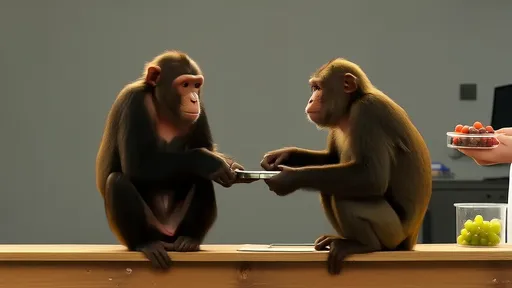
The journey into this realm began with serendipitous observations. Primatologists noticed that in captive groups, certain individuals would refuse to participate in tasks or share food if they witnessed others receiving better treatment. This wasn't mere aggression or random disobedience; it seemed calculated, almost righteous. The seminal work came from studies involving capuchin monkeys, where researchers designed experiments to test reactions to unequal rewards. In one famous setup, two monkeys were trained to exchange tokens for food. When both received cucumber slices as a reward, they complied happily. But when one received a grape—a far more desirable treat—while the other still got cucumber, the shortchanged monkey often refused to participate, sometimes even throwing the cucumber back at the researcher in what can only be described as a protest.
This behavior, now widely replicated across species like chimpanzees and macaques, suggests that monkeys possess a rudimentary but powerful sense of equity. They not only recognize when they are being shortchanged but are willing to incur a cost—losing out on food altogether—to express their dissatisfaction. It's a form of social bargaining, where cooperation is contingent on fair treatment. This isn't just about hunger; it's about principle. The monkeys appear to be making a statement: "I won't accept this injustice."
But what drives this behavior? Neuroscientists have delved into the brain mechanisms behind these reactions, identifying regions associated with reward processing and social evaluation. Studies using neuroimaging or neural recordings in primates show that the anterior cingulate cortex and prefrontal cortex—areas linked to emotion and decision-making in humans—light up when monkeys experience unequal outcomes. This neural activity correlates with their behavioral protests, indicating that the response is deeply embedded in their biology. It's not a learned trick; it's an innate reaction to unfairness, honed by evolution to maintain group cohesion.
Evolutionarily, this makes perfect sense. In social species, cooperation is key to survival. If some individuals consistently reap benefits without contributing or receive disproportionate rewards, group harmony breaks down, leading to conflict or fragmentation. A sense of fairness acts as a regulatory mechanism, discouraging freeloading and promoting stable alliances. Monkeys, living in complex societies with intricate hierarchies, rely on such mechanisms to navigate relationships. Their protests are not just emotional outbursts; they are adaptive strategies that reinforce social norms.
Interestingly, this behavior varies across contexts and species. For instance, capuchins, highly cooperative in the wild, show strong reactions to inequality, while more solitary species may not. Even within groups, factors like rank, kinship, and past experiences influence whether and how a monkey protests. High-ranking individuals might tolerate less fairness, confident in their ability to secure resources later, while lower-ranking ones might protest more vehemently, having less to lose. This nuance highlights that monkey fairness isn't a monolithic trait but a flexible, context-dependent tool.
The implications extend far beyond primatology. Understanding that monkeys protest inequality blurs the line between human and animal cognition, forcing us to reconsider concepts like morality and justice. If monkeys can exhibit behaviors that mirror human notions of fairness, might they also have precursors to ethical systems? This doesn't mean monkeys are moral philosophers, but it suggests that the roots of our own moral instincts run deep in our evolutionary history. It challenges anthropocentric views and invites a more humble perspective on our place in the natural world.
Moreover, this research has practical applications. In animal welfare, recognizing that monkeys perceive and react to unfairness underscores the need for ethical treatment in captivity, such as ensuring equitable access to resources. In robotics and AI, studying these behaviors can inform the design of more socially intelligent machines capable of navigating fair interactions. Even in economics, models of cooperation and negotiation could benefit from insights into how innate fairness mechanisms operate in social animals.
Yet, many questions remain. How do monkeys reconcile fairness with competition? Can they distinguish between intentional unfairness and accidental disparities? Future research might explore these avenues, perhaps using more complex experiments or cross-species comparisons. As technology advances, finer tools for monitoring neural activity in real-time could unravel deeper layers of this cognitive ability.
In the end, the image of a monkey throwing a cucumber in protest is more than just amusing; it's profound. It reminds us that the quest for fairness is not uniquely human but a shared legacy with our primate cousins. As we continue to uncover the depths of animal minds, we might find that the emotions and behaviors we hold dear are part of a broader tapestry of life, woven through millions of years of evolution. The monkey's protest is a whisper from our past, urging us to recognize the universal yearning for justice—even in the most unexpected places.

By /Aug 25, 2025
By /Aug 25, 2025
By /Aug 25, 2025

By /Aug 25, 2025
By /Aug 25, 2025
By /Aug 25, 2025
By /Aug 25, 2025
By /Aug 25, 2025
By /Aug 25, 2025
By /Aug 25, 2025
By /Aug 25, 2025
By /Aug 25, 2025
By /Aug 25, 2025
By /Aug 25, 2025
By /Aug 25, 2025
By /Aug 25, 2025
By /Aug 25, 2025
By /Aug 25, 2025
By /Aug 25, 2025
By /Aug 25, 2025
