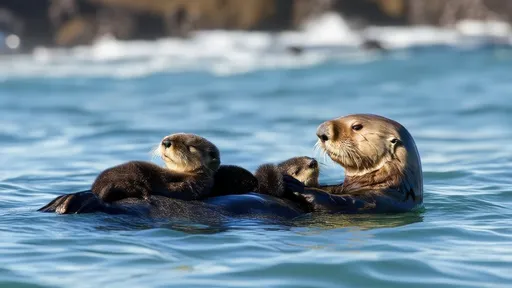
In the serene waters of the Pacific Northwest, a remarkable behavior unfolds each night as sea otters prepare to rest. These marine mammals, known for their playful antics and dense fur, engage in a practice that has captivated scientists and nature enthusiasts alike: they hold hands while sleeping. This endearing gesture, often observed in groups, is far more than a simple quirk of nature. It is a sophisticated social strategy that highlights the complex intelligence and emotional depth of these creatures, offering a window into their intricate world of survival and connection.
The image of sea otters floating on their backs, paws clasped together as they drift in tranquil slumber, has become iconic. But behind this adorable spectacle lies a critical survival mechanism. Sea otters are vulnerable to predators such as orcas and sharks, and they face the constant risk of drifting apart from their group in strong currents. By linking paws, they create a collective anchor, ensuring that they remain together and secure through the night. This behavior, often referred to as "rafting," demonstrates a keen understanding of safety in numbers and a proactive approach to mitigating environmental threats.
What makes this hand-holding particularly fascinating is its voluntary and cooperative nature. Sea otters are not bound by instinct alone; they actively choose to engage in this behavior, often seeking out specific companions. Research has shown that otters form strong social bonds, with mothers and pups, mating pairs, and even unrelated individuals participating in this practice. The act requires communication and trust, as otters must signal their intention to connect and maintain that connection throughout their rest. This level of social coordination suggests a high degree of emotional intelligence and empathy, traits that are essential for their tight-knit communities.
Beyond the practical benefits, the hand-holding behavior underscores the otters' capacity for emotional expression and social cohesion. In the wild, where survival is a daily challenge, such bonds are crucial for mental well-being and group stability. Observers have noted that otters often appear more relaxed and content when rafted together, indicating that this physical contact provides comfort and reassurance. It is a testament to their ability to form meaningful relationships, akin to the social structures seen in other highly intelligent species like dolphins or primates.
The social wisdom of sea otters extends beyond mere hand-holding. Their communities are characterized by complex interactions, including cooperative foraging, vocal communication, and mutual grooming. These behaviors are not just about survival; they reflect a rich social fabric where individuals support and rely on one another. For instance, when an otter is injured or ill, others in the group may provide protection and share food, demonstrating altruism and collective care. This network of support is vital in the harsh marine environment, where isolation often means certain death.
Scientists studying sea otter behavior have drawn parallels between their social strategies and those of humans. The emphasis on partnership, trust, and community mirrors many aspects of human society, suggesting that these animals possess a form of wisdom that is both intuitive and learned. Young otters learn by observing their elders, acquiring the skills and social norms that will guide them throughout their lives. This cultural transmission is a hallmark of advanced intelligence, enabling otter populations to adapt and thrive in changing conditions.
However, the very behaviors that make sea otters so resilient also make them vulnerable to human impacts. Habitat destruction, pollution, and climate change threaten their delicate ecosystems, disrupting the social networks that are essential for their survival. Conservation efforts must therefore consider not only the physical needs of these animals but also their social and emotional requirements. Protecting sea otter populations means preserving the environments where their complex behaviors can flourish, ensuring that future generations can continue to witness the wonder of otters holding hands in the water.
In the end, the simple act of sea otters holding hands while sleeping is a powerful symbol of their social intelligence and emotional depth. It reminds us that intelligence in the animal kingdom is not solely measured by problem-solving skills or tool use but also by the ability to connect, cooperate, and care for one another. As we strive to understand and protect these remarkable creatures, we are offered a lesson in the value of community and the profound wisdom that can be found in holding on to each other, both literally and metaphorically.

By /Aug 25, 2025
By /Aug 25, 2025
By /Aug 25, 2025
By /Aug 25, 2025
By /Aug 25, 2025
By /Aug 25, 2025
By /Aug 25, 2025
By /Aug 25, 2025
By /Aug 25, 2025
By /Aug 25, 2025
By /Aug 25, 2025
By /Aug 25, 2025
By /Aug 25, 2025
By /Aug 25, 2025
By /Aug 25, 2025
By /Aug 25, 2025
By /Aug 25, 2025
By /Aug 25, 2025
By /Aug 25, 2025
By /Aug 25, 2025
